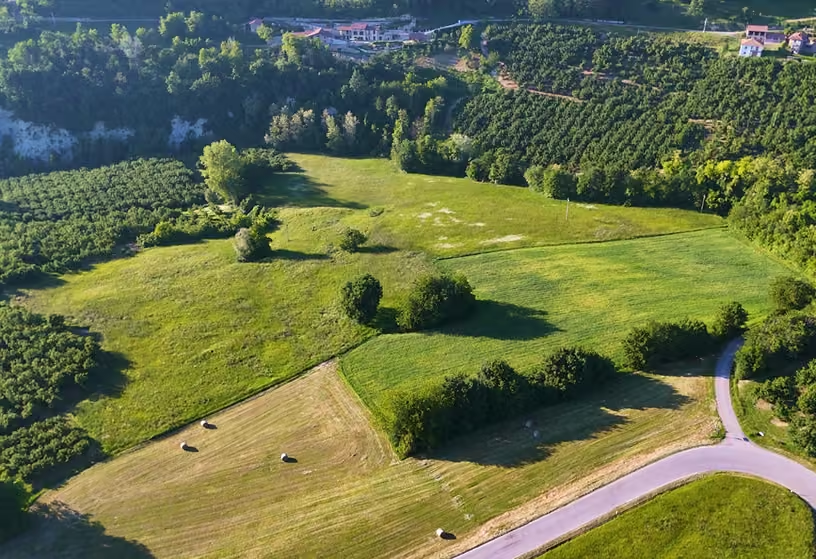
A house has a price you can look up. Vacant land usually doesn’t. Two parcels that look alike on a map can be worth very different amounts, and that makes it hard to know what yours is worth.
Before you talk to any buyer, it helps to have a realistic sense of the number. Here’s what actually moves the value of land in North Carolina, where to look for clues, and how to think about the difference between a market price and a cash offer.
What Affects the Value of Vacant Land
A handful of factors do most of the work:
- Location. Proximity to towns, roads, and water matters. Land near Lake Norman or growing areas around Charlotte often draws more interest than remote ground.
- Acreage. Size matters, but bigger isn’t always priced higher per acre.
- Road access. Land with legal, usable road access is worth more than land you can’t easily reach.
- Utilities. Nearby water, power, and sewer or septic potential can raise value.
- Zoning and use. What the land can be used for, whether homes, farming, or something else, shapes who wants it.
- Flood zones and wetlands. These can limit how the land can be used.
- Terrain and condition. Steep, rocky, or heavily wooded land is often harder to build on.
Your county can confirm most of these details.
Why Raw Land Is Harder to Price Than a House
When a house sells, there are usually plenty of similar homes nearby to compare against. Land is different. Every parcel has its own shape, access, soil, and surroundings, and there are often very few recent sales close by that truly match.
That’s why two honest estimates can land in different places. It doesn’t mean anyone is being dishonest. It just means land takes more judgment, and a single number from an online tool should be treated as a rough guide at best.
Where to Look for Clues
You can do a good amount of homework for free:
- County tax records. Most North Carolina counties have an online lookup where you can find acreage, parcel details, and the assessed value.
- County GIS maps. These show boundaries, roads, flood zones, and nearby parcels.
- Recent nearby sales. Look for similar parcels that sold in the last year or two. Pay attention to size and access, not just location.
- Local professionals. A land-focused agent or appraiser can give a more tailored opinion, though they may charge for it.
Keep notes on what you find. Even a rough range is useful when you start comparing offers.
Why Your Tax Assessment Isn’t a Market Price
It’s tempting to treat the assessed value on your tax bill as what the land is worth. In general, that’s not a safe assumption.
Assessed values are set by the county for tax purposes, often on a schedule, using broad methods. They may be higher or lower than what a buyer would actually pay today. Think of the assessment as one data point, not the answer.
Cash Offer vs. Market Price: What You’re Trading
A market price is what land might sell for if you list it, wait for the right buyer, and go through the full process. A cash offer is what a buyer will pay now, with certainty.
The difference comes down to what you trade:
- With a listing, you may get a higher price, but you pay commissions and fees, wait for a buyer, and accept the risk that a deal falls through.
- With a direct cash offer, you skip the fees, the waiting, and the prep work, and you choose your closing date. The offer may be lower than a patient listing could bring.
Neither is better for everyone. If you’re in no rush, the open market may be worth trying. If you’d rather have a simple, firm answer, a direct offer can be the better fit. We’ll always tell you which way we think it leans for your land.
Get a Written Offer and Compare It Yourself
The easiest way to see where your land stands is to get a real number in writing. Send us your property details and we’ll deliver a written cash offer within 48 hours. There’s no obligation, so you can put it next to your own research and decide what’s right for you.