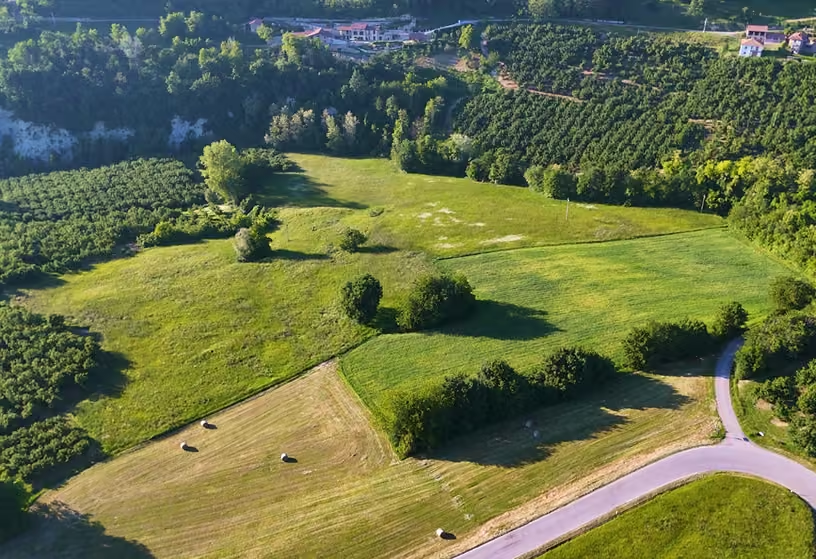
Inheriting land can feel like a gift and a burden at the same time. Maybe you knew a parcel was in the family. Maybe it showed up in an estate with no warning. Either way, you now own a piece of North Carolina, and you may not live anywhere near it.
If you’re wondering what to do with it, you’re not alone. Many heirs don’t want the land, can’t use it, or simply don’t know where to begin. This guide walks through the basics in plain language, so you can decide what’s right for you and your family.
First, Make Sure the Land Is Actually Yours to Sell
Before anything else, it helps to know where the property legally stands. Land doesn’t always pass to heirs the moment someone passes away. Depending on the situation, the estate may need to go through probate first, and the deed may still be in the name of the person who died.
A few simple things to check:
- Whose name is on the current deed?
- Has the estate been settled, or is it still open?
- Are there any loans, liens, or other claims on the property?
The rules depend on your situation, so the safest first step is a short conversation with a local North Carolina attorney. They can tell you what paperwork you need and who has the authority to sign. We’re not attorneys, and nothing here is legal advice. It’s just a starting point so you know what questions to ask.
If There Are Several Heirs, Get on the Same Page
Land is often left to more than one person: siblings, cousins, or a whole branch of the family. When that happens, decisions usually need everyone’s involvement. One person can’t always make the call for the group.
That can get complicated, especially when people live in different states or see the land differently. Some may want to keep it for sentimental reasons. Others may just want to move on.
A few things that tend to help:
- Start with a simple, honest conversation. Ask each person what they’d like to see happen.
- Get everyone’s contact information in one place.
- Keep things respectful. The land matters, but so do the relationships.
If you’re all leaning toward selling, it’s much easier when everyone agrees on the plan before you talk to a buyer.
What It Costs to Hold Onto Inherited Land
Even when land sits empty, it isn’t free to own. Costs tend to add up quietly over the years:
- Property taxes come due every year, whether or not you use the land.
- Upkeep can mean mowing, clearing brush, or dealing with downed trees and trespassers.
- Liability is something many owners don’t think about until a problem comes up.
None of that means you have to sell. Some families keep land for generations, and that’s a good choice for them. But it’s worth adding up what it costs you each year, and asking whether the land is giving you anything back.
Your Options: Keep It, List It, or Sell It Directly
Once you know the land is yours to sell and everyone is aligned, you generally have three paths.
Keep it. This makes sense if you have a plan for it, or a real attachment to it, and you’re comfortable covering the yearly costs.
List it with a real estate agent. This can work well, especially for land in a high-demand spot. The trade-offs are that agents typically charge a commission, and vacant land can take a long time to sell. You may also be asked to clean up or survey the property first.
Sell directly to a land buyer. This is usually faster and simpler. You skip the listing, the showings, and the waiting. The trade-off is that a direct buyer’s offer may come in below what a long, patient listing might eventually bring. We’d rather say that plainly than have you find out later.
There’s no single right answer. The best choice is the one that fits your timeline, your family, and your finances.
What Selling Directly Looks Like
If a direct sale sounds like the right fit, here’s how it works with us.
- Tell us about the land. Share the location and size using our short form.
- Get a written offer. We review the details and send a written cash offer within 48 hours.
- Pick your closing date. If you accept, you choose the date that works for you.
There are no agents, no fees, and no commissions. We pay closing costs, and the closing is handled through a local North Carolina attorney or title company. The number on your written offer is the number you walk away with.
You’ll also be talking to Andrew Keel, the owner, not a call center. If you have questions about the estate, the paperwork, or what to expect, he’ll walk you through it one step at a time.
Ready to See What Your Options Look Like?
Inheriting land doesn’t have to be stressful. If you’d like to know what a direct sale could look like, send us the details and we’ll send a written cash offer within 48 hours. There’s no obligation, and if selling to us isn’t the right move for your situation, we’ll tell you.